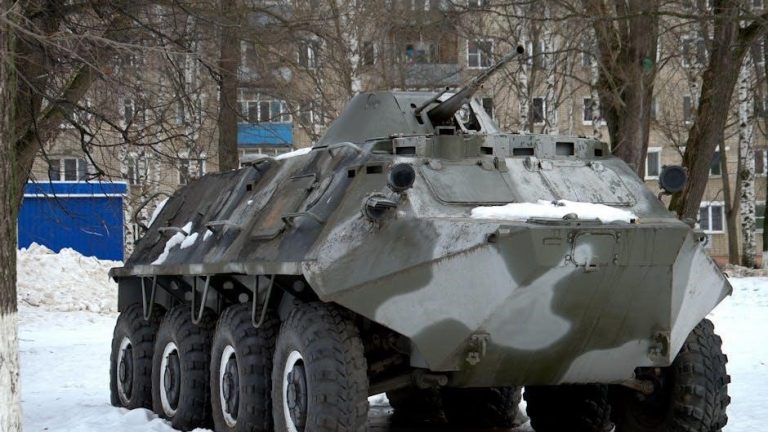
Land Warfare Tactics: A Comprehensive Overview
Land warfare tactics are evolving, with resources like JP 3-0 PDF and AJP-3.6 detailing electronic warfare’s role and modern combat function integration.
Land warfare tactics represent the foundational methods employed by ground forces to achieve objectives during combat. Understanding these tactics requires examining evolving doctrine, readily available in PDF formats like Joint Publication 3-0 and Allied Joint Publication 3.6. These documents detail manoeuvre theory, emphasizing thinking about war beyond specific techniques.
Modern land warfare necessitates integrated planning across land, sea, and air forces, demanding optimal force integration. The Indian Army’s strategy focuses on networked theatre battles, requiring a strong, well-structured approach. Accessing these resources provides insight into commanding land forces and adapting to contemporary challenges.
Historical Evolution of Land Warfare
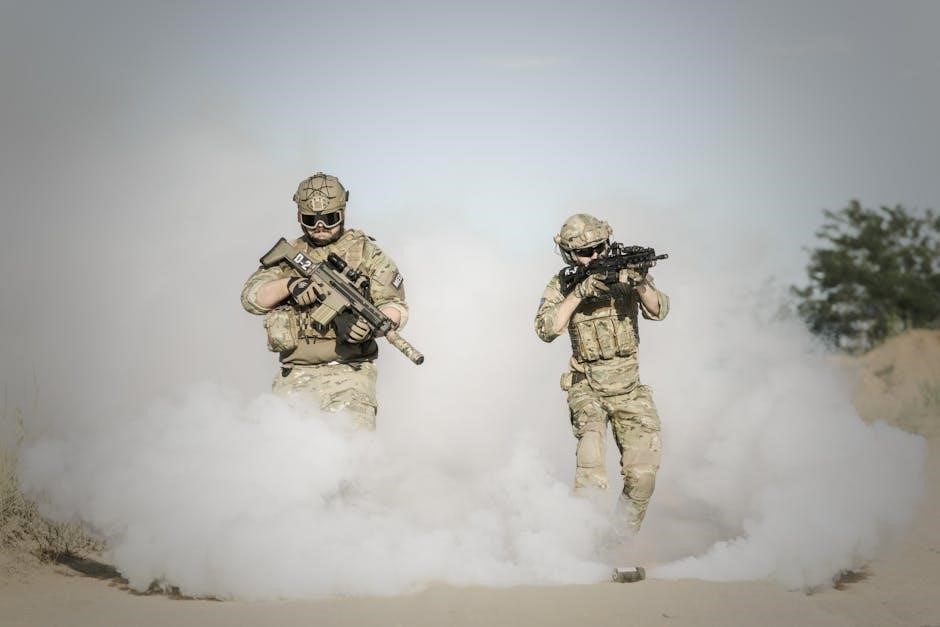
PDF resources trace land warfare’s evolution, from ancient formations to modern networked battles, showcasing changes in commanding forces and applied tactics.
Ancient and Medieval Tactics
Early land warfare tactics, documented in historical PDF analyses, centered on massed formations like phalanxes and legions, prioritizing close-order cohesion and shock impact. Medieval periods saw the rise of heavily armored knights and castle-based defense, influencing siege warfare and battlefield maneuver.
These tactics, though seemingly rudimentary by modern standards, were deeply rooted in logistical constraints and the available weaponry. PDF resources highlight how terrain dictated engagements, and command relied heavily on personal leadership and signal systems. The evolution from these foundational approaches laid the groundwork for later military doctrines, shaping the art of commanding forces throughout history.
The Rise of Linear Tactics
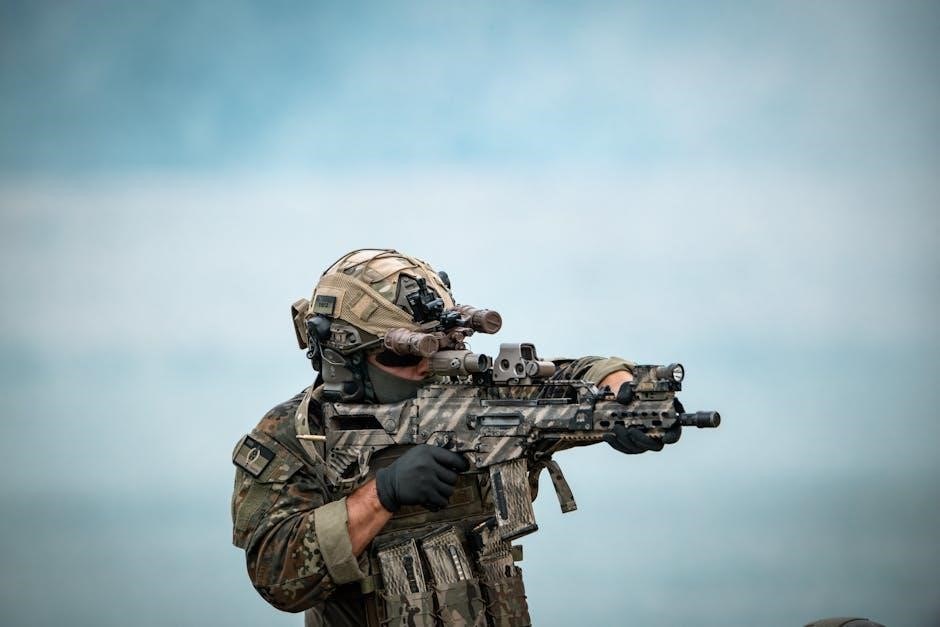
The advent of gunpowder weaponry in the 16th and 17th centuries spurred a shift towards linear tactics, detailed in numerous military PDF documents. These formations, characterized by thin lines of musketeers, maximized firepower and facilitated coordinated volleys. Land warfare transitioned from melee-focused engagements to ranged combat, demanding disciplined drill and precise maneuvering.
PDF analyses reveal that linear tactics prioritized maximizing the volume of fire, often at the expense of tactical flexibility. Bayonets were introduced to defend against cavalry charges, solidifying the line’s defensive capabilities. This era marked a significant evolution in battlefield organization and the application of firepower, influencing military doctrine for centuries.
Modern Land Warfare: 20th and 21st Centuries
The 20th and 21st centuries witnessed a dramatic acceleration in land warfare’s evolution, extensively documented in contemporary military PDFs like JP 3-0. The introduction of tanks, aircraft, and precision-guided munitions revolutionized tactics, emphasizing speed, maneuver, and combined arms operations. Land forces increasingly operate as integral parts of joint task forces.
Modern warfare, as detailed in various doctrine PDFs, prioritizes network-centric capabilities and information dominance. Contemporary challenges, including urban combat and hybrid threats, demand adaptable tactics and a focus on asymmetric warfare. Technological advancements continue to reshape the battlefield, necessitating constant adaptation and innovation.
Core Principles of Land Warfare Doctrine
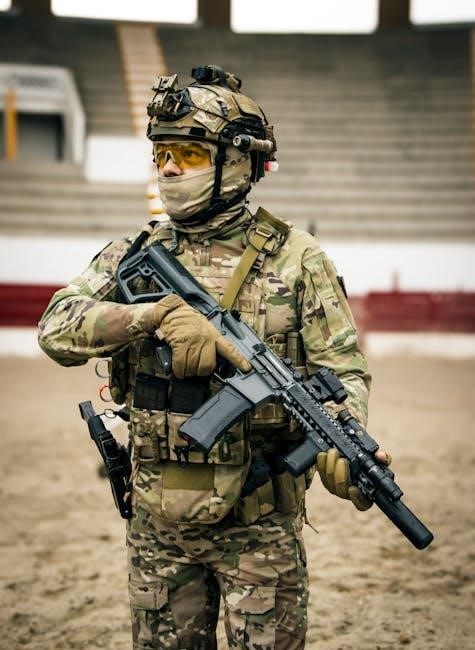
Land warfare doctrine, accessible via PDF resources, centers on manoeuvre warfare, fire and movement, and combined arms – vital for modern tactics.
Manoeuvre Warfare
Manoeuvre warfare, detailed in accessible PDF doctrine, isn’t a specific set of tactics, but a way of thinking about war itself. It prioritizes disrupting the enemy’s plans and creating situations where they are forced to react, rather than engaging in a purely attritional fight.
This approach, outlined in documents like JP 3-0, emphasizes speed, initiative, and decentralized command. Successful manoeuvre relies on understanding the enemy’s weaknesses and exploiting them through rapid movement and focused attacks. It’s a dynamic concept, constantly adapting to the battlefield’s evolving conditions, and is crucial for modern land warfare tactics.
Fire and Movement
Fire and movement, a foundational tenet of land warfare tactics, is thoroughly documented in joint doctrine PDFs like JP 3-0. This tactic involves one element delivering suppressive fire while another maneuvers to gain an advantage, or to close with and destroy the enemy.
Effective implementation requires precise coordination and timing. Suppressive fire must be accurate and sustained, while the maneuvering element must exploit the created opportunity swiftly. Modern applications integrate precision guided munitions and electronic warfare to enhance both the fire and movement components, maximizing battlefield effectiveness.
Combined Arms Operations
Combined arms operations, central to modern land warfare tactics, are extensively detailed within joint doctrine, accessible through PDF resources like JP 3-0. This approach integrates infantry, armor, artillery, and aviation – alongside cyber and electronic warfare elements – to achieve synergistic effects.
Successful execution demands seamless coordination and mutual support. Each component’s capabilities are maximized when employed in concert, overcoming enemy strengths and exploiting vulnerabilities. Contemporary doctrine emphasizes networked combat, enabling real-time information sharing and enhancing the overall effectiveness of combined arms teams.
Key Tactical Formations and Maneuvers
Land warfare tactics PDF resources outline offensive and defensive formations, flanking maneuvers, and envelopment strategies for effective battlefield control and mission success.
Offensive Formations
Offensive formations in land warfare tactics, detailed in various PDF doctrine manuals, are designed to seize the initiative and overcome enemy defenses. These formations prioritize momentum and firepower. Common examples include the wedge, designed for concentrated penetration, and the echelon, providing both frontal assault capability and security against flanking maneuvers.
The line formation offers broad front attacks, while the column maximizes speed of advance. Selecting the appropriate formation depends on terrain, enemy disposition, and the commander’s intent. PDF resources emphasize the importance of combined arms integration within these formations, utilizing maneuver warfare principles to exploit vulnerabilities and achieve decisive results. Effective execution requires rigorous training and adaptable leadership.
Defensive Formations
Defensive formations, as outlined in land warfare tactics PDF documents, prioritize withstanding enemy attacks and preserving combat power. Key formations include the linear defense, offering a strong front but vulnerable flanks, and the area defense, trading space for time and attrition. The perimeter defense secures a critical area against multiple threats.
Depth is crucial; successive defensive positions allow for fallback and continued resistance. Doctrine emphasizes integrating obstacles, firepower, and counter-attack capabilities. PDF resources highlight the importance of deception and camouflage to disrupt enemy planning. Successful defense requires thorough reconnaissance, strong leadership, and a resilient fighting spirit, maximizing defensive advantages.
Flanking and Envelopment
Flanking and envelopment, detailed in land warfare tactics PDF guides, represent decisive offensive maneuvers. A flank attack targets an enemy’s side, disrupting cohesion and creating local superiority. Envelopment aims to bypass the enemy’s main defenses, cutting them off from reinforcements and escape routes. These tactics exploit weaknesses in enemy positioning and require superior maneuverability.
Successful execution demands thorough reconnaissance, coordinated movement, and concentrated firepower. PDF resources emphasize the importance of deception to mask intentions. Achieving surprise is paramount, as is maintaining momentum; Properly executed, flanking or envelopment can shatter enemy formations and achieve a swift, decisive victory, altering the battlefield dynamic.

The Role of Technology in Modern Land Tactics
PDF resources highlight precision munitions, UAS/drones, and electronic warfare as key technological drivers reshaping land tactics, enhancing situational awareness and firepower.
Precision Guided Munitions
Precision Guided Munitions (PGMs) fundamentally altered land warfare tactics, as detailed in available PDF doctrine. These systems, encompassing laser-guided bombs and missiles, drastically improve accuracy, minimizing collateral damage and maximizing effects on intended targets. This capability necessitates a shift towards more distributed operations, reducing reliance on massed artillery fire.
PGMs enable commanders to engage high-value targets with greater confidence, disrupting enemy formations and infrastructure. However, dependence on PGMs also introduces vulnerabilities, such as susceptibility to electronic warfare and the need for robust intelligence, surveillance, and reconnaissance (ISR) assets to identify and locate targets effectively. Modern land combat increasingly revolves around leveraging PGM advantages.
Unmanned Aerial Systems (UAS) / Drones
Unmanned Aerial Systems (UAS), or drones, represent a transformative element in modern land warfare tactics, extensively covered in contemporary PDF doctrine. They provide persistent ISR capabilities, enhancing situational awareness for ground forces and enabling targeted strikes. UAS facilitate reconnaissance, target acquisition, and damage assessment, reducing risk to personnel.
Their proliferation necessitates countermeasures, including electronic warfare techniques to disrupt drone operations. Integration of UAS into combined arms maneuvers requires careful coordination and communication protocols. The ability to deploy small, inexpensive drones offers a significant tactical advantage, impacting enemy decision-making and operational tempo in land combat scenarios.
Electronic Warfare in Land Battle
Electronic Warfare (EW) is a critical component of modern land warfare tactics, thoroughly addressed in joint doctrine PDFs like AJP-3.6. EW encompasses jamming, deception, and protection of friendly systems from enemy electronic attacks. It disrupts enemy communications, radar, and weapon systems, creating opportunities for maneuver and reducing enemy effectiveness.
Effective EW requires integrated planning and execution, coordinating capabilities across all domains. Counter-EW measures are equally vital, safeguarding friendly forces from disruption. The increasing reliance on electronic systems necessitates a robust EW capability to maintain a tactical advantage in land combat, influencing the overall war effort.
Land Warfare and Joint Operations
Land warfare necessitates seamless integration with air and naval forces, as outlined in doctrine PDFs, demanding optimal force integration for effective warfighting.
Integration with Air Support
Land warfare tactics significantly benefit from close integration with air support, a principle emphasized within joint doctrine PDFs like JP 3-0. Effective coordination allows for decisive maneuver and concentrated firepower, enhancing battlefield effectiveness. Air assets provide crucial reconnaissance, target acquisition, and close air support, directly impacting land force operations.
Modern warfare demands synchronized planning and execution, leveraging air superiority to suppress enemy defenses and enable land forces to achieve objectives. Utilizing networked capabilities, as highlighted in various publications, ensures real-time information sharing and rapid response to evolving battlefield conditions. This synergy is paramount for success in contemporary conflicts.
Coordination with Naval Forces
Successful land warfare tactics increasingly rely on seamless coordination with naval forces, a concept detailed in joint doctrine PDFs. Naval assets provide critical offshore fire support, logistical resupply, and maritime interdiction capabilities, extending the reach of land operations. Integration enables amphibious landings, coastal bombardment, and control of vital sea lanes.
Contemporary warfare necessitates a combined arms approach, where naval and land forces operate synergistically. As outlined in strategic documents, commitment of all forces is the norm, demanding optimal integration for effective combat power. This collaborative effort enhances operational flexibility and maximizes overall mission success.
The Importance of Logistics
Effective land warfare tactics are fundamentally underpinned by robust logistical support, a critical element often detailed within comprehensive doctrine PDFs. Sustaining land forces requires the seamless flow of personnel, equipment, ammunition, and supplies from strategic bases to the forward line of troops.
Failures in logistics can rapidly degrade operational capabilities, hindering maneuverability and combat effectiveness. Modern warfare demands sophisticated logistical networks capable of adapting to dynamic battlefield conditions. Integrated planning, as highlighted in joint publications, ensures timely delivery and efficient resource allocation, vital for sustained combat operations.

Contemporary Challenges in Land Warfare
PDF resources outline modern hurdles: urban combat, counter-insurgency, and hybrid warfare demand adaptable land warfare tactics, shifting traditional doctrine approaches.
Urban Warfare
Urban warfare presents unique challenges for land warfare tactics, demanding a departure from conventional approaches. PDF documents detailing modern doctrine emphasize the complexities of fighting in built-up environments, where civilian populations and infrastructure significantly impact operations. Success hinges on meticulous planning, precise firepower, and adaptable maneuverability.
These resources highlight the need for specialized training, focusing on close-quarters battle (CQB) techniques and minimizing collateral damage. Effective communication and intelligence gathering are paramount, alongside a nuanced understanding of the urban terrain. The integration of technology, like drones for reconnaissance, becomes crucial for navigating this complex battlefield, as outlined in available PDF guides.
Counter-Insurgency Operations
Counter-insurgency (COIN) operations, detailed in various land warfare tactics PDF resources, necessitate a fundamentally different approach than conventional warfare. Success relies heavily on winning the support of the local population, requiring a blend of military force and civic action. Doctrine emphasizes intelligence-led policing, targeted operations against insurgent leaders, and robust efforts to improve governance and economic conditions.
These PDF guides stress the importance of understanding the political, social, and cultural context of the conflict. Minimizing civilian casualties and building trust are paramount; Effective COIN requires a long-term commitment and a comprehensive strategy that addresses the root causes of the insurgency, as outlined in joint publications.
Hybrid Warfare Tactics
Hybrid warfare, explored in contemporary land warfare tactics PDF documents, represents a complex challenge, blending conventional and unconventional methods. These tactics utilize a combination of military force, irregular warfare, cyberattacks, and information operations to achieve strategic objectives. Doctrine highlights the difficulty in attributing attacks and the blurred lines between peace and war.
PDF resources emphasize the need for adaptable and integrated responses, requiring collaboration across multiple domains. Countering hybrid threats demands enhanced intelligence gathering, robust cyber defenses, and a comprehensive understanding of the adversary’s strategies. Recognizing and responding to disinformation campaigns is also crucial, as detailed in joint publications.
Resources and Further Reading (PDF Focus)
Land warfare tactics PDF resources include JP 3-0, AJP-3.6, and evolving doctrine documents, offering insights into modern combat and strategic planning.
Accessing Land Warfare Doctrine PDFs
Land warfare tactics PDFs are readily available through official defense channels. The Defense Technical Information Center (DTIC) hosts Joint Publication 3-0 (JP 3-0), a foundational document outlining U.S. military operations, accessible for download. Allied Joint Publication 3.6 (AJP-3.6) provides allied perspectives on electronic warfare, crucial for modern land battles.
These PDFs detail maneuver theory, combined arms operations, and the integration of air and naval support. Regularly updated doctrine reflects evolving threats and technological advancements. Accessing these resources is vital for professionals seeking a comprehensive understanding of contemporary land warfare principles and tactical applications.
Utilizing Joint Publication 3-0 (JP 3-0)
Joint Publication 3-0 (JP 3-0), available as a PDF, serves as the cornerstone for understanding U.S. land warfare tactics. It details the application of combat functions and emphasizes maneuver warfare principles. Analyzing JP 3-0 reveals how modern forces integrate precision guided munitions and electronic warfare systems.

The document outlines the importance of joint operations, coordinating land forces with air and naval assets. It provides a framework for planning and executing networked theatre battles, crucial for optimal force integration. Understanding JP 3-0 is essential for professionals navigating the complexities of contemporary warfare.
Analyzing Allied Joint Doctrine (AJP-3.6)
Allied Joint Publication 3;6 (AJP-3.6), often accessed as a PDF, focuses specifically on electronic warfare within the land battle context. It complements JP 3-0 by detailing allied approaches to disrupting enemy capabilities through electronic means. This doctrine highlights the evolving role of technology in modern land tactics.
AJP-3.6 examines how electronic warfare integrates with broader combat functions, impacting maneuver warfare and overall operational effectiveness. Understanding its principles is vital for interoperability with allied forces and developing comprehensive defense strategies against technologically advanced adversaries.