
Edith Eger: Life, Trauma, and “The Dancer of Auschwitz”
Edith Eger, a Holocaust survivor and author of “The Dancer of Auschwitz,” passed away on April 27, 2026, at the age of 98, leaving behind a powerful legacy.
Her acclaimed memoir, detailing her experiences in Auschwitz, has resonated globally, becoming a significant work on trauma, inner freedom, and healing.
Eger’s story, originating from her deportation to Auschwitz at age 16 in 1944, offers profound insights into resilience and the human spirit;
Early Life and Background
Edith Eger was born in Košice, Czechoslovakia (now Slovakia) in 1927, to Hungarian Jewish parents. Her early life was characterized by a loving and supportive family environment, fostering a passion for dance – a pursuit that would later become symbolically significant in her life and work. She excelled in gymnastics and ballet, dreaming of representing Hungary in the Olympics, a dream tragically interrupted by the outbreak of World War II and the subsequent persecution of Jews.
Growing up in a close-knit Jewish community, Edith experienced a relatively sheltered and happy childhood before the horrors of the Holocaust descended. Her family valued education and cultural enrichment, instilling in her a strong sense of self and a belief in the power of the human spirit. This foundation proved crucial to her survival and eventual healing, providing an inner strength that sustained her through unimaginable suffering. The seeds of her future psychological work were unknowingly sown in these formative years.
Family History and Pre-War Life in Hungary
Edith Eger’s family roots were deeply embedded in Hungarian Jewish culture. Her parents, István and Magdolna Eger, provided a stable and loving home, emphasizing the importance of education and artistic expression. The family enjoyed a comfortable middle-class life in Košice, a city with a vibrant Jewish community before the war. Edith was the eldest of three daughters, with younger sisters Magda and Erika, fostering a strong sibling bond that would prove vital during their shared ordeal.
Pre-war Hungary, while experiencing rising antisemitism, still offered a degree of normalcy for Jewish families like the Egers. Edith’s passion for dance flourished, and she dedicated herself to gymnastics and ballet, aspiring to compete on the Olympic stage. This period was marked by youthful dreams and a sense of optimism, abruptly shattered by the Nazi occupation and the escalating persecution of Jewish citizens. The family’s idyllic existence was irrevocably altered, setting the stage for unimaginable hardship.
Deportation to Auschwitz
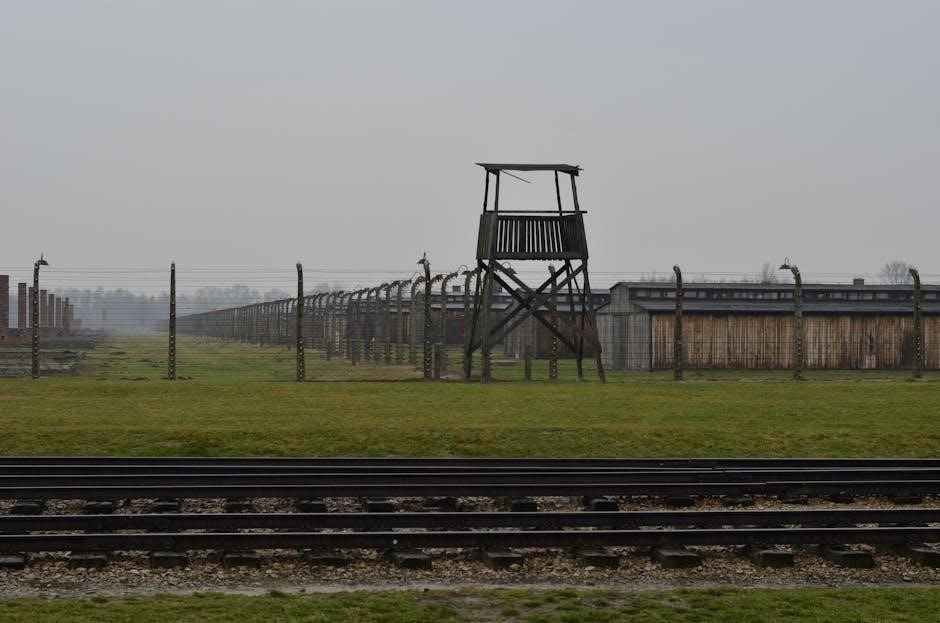
In 1944, at the age of sixteen, Edith Eger and her family were brutally torn from their home in Hungary and deported to Auschwitz. The escalating Nazi persecution culminated in their forced removal, crammed into cattle cars alongside countless others, enduring horrific conditions during the transport. The journey itself was a terrifying ordeal, marked by starvation, disease, and the constant fear of the unknown. Upon arrival at Auschwitz, the family faced the immediate and devastating reality of the camp’s horrors.
The initial separation of families was a particularly traumatic experience, with Edith and her sisters witnessing the agonizing loss of their mother, who was immediately sent to the gas chambers. This moment of profound grief and despair marked the beginning of their struggle for survival in the face of unimaginable cruelty and systematic dehumanization. The Eger sisters were left to navigate the camp’s brutal landscape alone.
Arrival and Initial Experiences in Auschwitz
The arrival at Auschwitz was a descent into unimaginable horror for Edith Eger. Stripped of their belongings, dignity, and identities, new arrivals endured a chaotic and dehumanizing selection process. The infamous Dr. Josef Mengele oversaw the sorting of prisoners, determining who would be subjected to immediate execution and who would be temporarily spared for forced labor. Edith and her sister Magda were miraculously spared, but faced the immediate trauma of witnessing their mother’s selection for the gas chambers – a devastating loss that would forever haunt them.
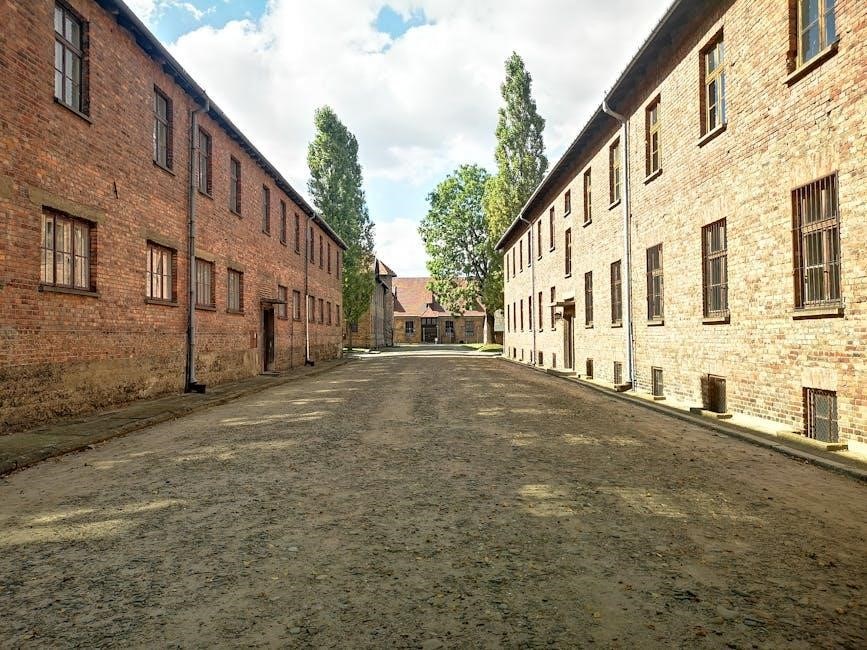
The initial days were marked by starvation, relentless physical labor, and the constant threat of violence. Prisoners were crammed into overcrowded barracks, battling disease and despair. Edith quickly learned the brutal rules of survival, understanding that maintaining a semblance of inner strength was crucial in the face of overwhelming adversity. The camp’s atmosphere was thick with fear and the stench of death.
Survival Strategies in the Camp
Within the horrors of Auschwitz, Edith Eger developed crucial survival strategies, both physical and mental. She quickly understood the importance of maintaining a sense of inner freedom, even amidst complete external control. This involved detaching herself emotionally from her circumstances, visualizing peaceful scenes, and finding small moments of beauty within the bleakness. Her background as a dancer proved unexpectedly vital; she secretly performed routines in her mind, preserving her spirit and sense of self.

Eger also learned to observe and adapt, understanding the behaviors that increased her chances of survival. She fostered relationships with fellow prisoners, offering support and receiving it in return. Maintaining hope, even when it seemed impossible, became a conscious act of defiance against the dehumanizing forces of the camp. These internal resources proved essential for enduring the unimaginable.
The Psychological Impact of Auschwitz
Edith Eger’s experiences profoundly impacted her psyche, revealing the enduring power of trauma and the remarkable capacity for resilience and inner freedom.
Witnessing and Experiencing Trauma
Edith Eger’s deportation to Auschwitz at the tender age of sixteen exposed her to unimaginable horrors, witnessing and enduring profound trauma that would shape her life. The camp represented a systematic dehumanization, filled with constant fear, loss, and the ever-present threat of death.
She directly observed and experienced the brutality inflicted upon fellow prisoners, the separation of families, and the sheer scale of suffering; This exposure left indelible marks on her psyche, forcing her to confront the darkest aspects of human nature and the fragility of life. Her memoir, “The Dancer of Auschwitz,” vividly portrays these harrowing experiences, detailing the psychological toll of such extreme adversity.
Eger’s ability to recall and articulate these events decades later underscores the lasting impact of trauma, while simultaneously demonstrating the human capacity for survival and remembrance. The weight of these memories fueled her later work as a therapist, dedicated to helping others navigate their own traumatic experiences.
Maintaining Hope and Inner Freedom
Despite the horrific conditions within Auschwitz, Edith Eger remarkably cultivated a sense of hope and preserved her inner freedom, a testament to the resilience of the human spirit. She discovered that even in the face of utter deprivation, one could retain control over their thoughts and choose their response to circumstances.
This internal locus of control became her lifeline, allowing her to distance herself emotionally from the immediate brutality and maintain a sense of self-worth. Eger utilized imagination and mental exercises, visualizing beautiful scenes and recalling cherished memories, as a means of escaping the confines of the camp mentally.
Her story emphasizes that freedom isn’t necessarily physical; it’s a state of mind. This profound realization, central to her later psychological work, highlights the power of choice even when external circumstances are overwhelmingly oppressive. “The Dancer of Auschwitz” beautifully illustrates this enduring message.
The Role of Imagination and Mental Resilience
Edith Eger’s survival in Auschwitz hinged significantly on her extraordinary capacity for imagination and mental resilience. Faced with unimaginable horrors, she actively employed mental strategies to detach herself from the immediate suffering and preserve her inner world.

Eger vividly visualized herself teaching gymnastics, a passion from her pre-war life, and imagined performing for audiences. These mental rehearsals weren’t merely escapism; they were acts of defiance, reclaiming agency in a situation designed to strip it away. This internal world became a sanctuary, a space where she could maintain a sense of self and purpose.
Her ability to mentally transcend her physical reality demonstrates the profound power of the human mind to cope with trauma. “The Dancer of Auschwitz” underscores that resilience isn’t about avoiding pain, but about finding the strength to navigate it while safeguarding one’s inner spirit.

Post-War Life and Healing
Following liberation, Edith Eger embarked on a journey of recovery, emigrating and pursuing psychology to understand and help others heal from trauma.
Her life became dedicated to assisting survivors and promoting mental wellbeing.
Liberation and Initial Recovery
Edith Eger’s liberation from Auschwitz in 1945 marked the beginning of an arduous journey toward physical and emotional recovery. Initially, she faced immense challenges, grappling with starvation, illness, and the profound psychological scars of her experiences.
The immediate aftermath involved a desperate search for family, a heartbreaking quest that revealed the loss of her mother and sister upon arrival at the camp. This devastating realization compounded her trauma, adding grief to the already overwhelming burden.
Despite the immense pain, Eger demonstrated remarkable resilience, slowly rebuilding her strength and beginning to confront the horrors she had endured. This period was characterized by a fragile hope and a determination to reclaim her life, laying the foundation for her future work in psychology and healing.
Her survival itself was a testament to her inner fortitude.
Emigration and New Beginnings
Following her liberation and initial recovery in Europe, Edith Eger embarked on a new chapter by emigrating to the United States. This move represented a pivotal moment, offering her the opportunity to build a life free from the shadows of her past and pursue her burgeoning interests.
Settling in America, she embraced the chance to create a fresh start, determined to forge a path toward healing and purpose. This transition wasn’t without its difficulties, as she navigated a new culture and language while still processing the trauma of Auschwitz.
However, Eger’s inherent strength and unwavering spirit propelled her forward, leading her to pursue higher education and ultimately a career in psychology, driven by a desire to help others overcome their own challenges.
This emigration signified a rebirth and a commitment to a future defined by hope and resilience.
Pursuit of Psychology and Therapy
Driven by her experiences and a deep-seated desire to understand the human capacity for resilience, Edith Eger dedicated herself to the study of psychology. She earned a doctorate, becoming a licensed therapist and specializing in trauma recovery.
Her unique perspective, informed by her own survival in Auschwitz, profoundly shaped her therapeutic approach. She believed in the power of choice, even in the face of unimaginable suffering, and emphasized the importance of taking responsibility for one’s own healing.
Eger’s work focused on helping individuals confront their past traumas, find meaning in their experiences, and cultivate inner freedom. She integrated various therapeutic modalities, offering a holistic and compassionate approach to healing.
Her dedication to the field stemmed from a profound belief in the potential for transformation and the enduring strength of the human spirit.

“The Dancer of Auschwitz”: The Book
“The Dancer of Auschwitz”, published later in her life, became a phenomenal success, selling over a million copies and garnering widespread acclaim for its powerful message.
Publication and Reception of the Book
Edith Eger’s memoir, “The Dancer of Auschwitz,” was published to widespread acclaim, particularly remarkable considering she penned it in her nineties. The book quickly became a phenomenon, resonating with readers globally and achieving over a million copies sold. Planeta, her publisher, announced her passing on April 27, 2026, highlighting the enduring legacy of her work.
The book’s reception wasn’t merely commercial; it garnered emotional responses from figures like Annie Lennox, who publicly valued Eger’s legacy. It’s a testament to the power of her narrative, detailing her harrowing experiences as a Holocaust survivor and offering a message of hope and resilience. The book’s success speaks to a deep desire for stories of overcoming adversity and finding meaning in the face of unimaginable trauma. It’s a literary and human triumph.
Key Themes: Choice, Meaning, and Healing
“The Dancer of Auschwitz” profoundly explores the themes of choice, meaning, and healing in the context of unimaginable suffering. Edith Eger’s narrative emphasizes that even within the confines of Auschwitz, individuals retain the power of choice – how to respond to their circumstances, and how to maintain their inner freedom.
The book argues that finding meaning, even in the darkest of times, is crucial for survival and recovery. Eger’s experience demonstrates the possibility of healing from deep trauma, not through forgetting, but through confronting the past and choosing a path forward. Her story isn’t simply a recounting of horrors, but a testament to the resilience of the human spirit and the capacity for growth. It’s a powerful message of hope and empowerment.
The Significance of the Title: “The Dancer of Auschwitz”
The title, “The Dancer of Auschwitz,” is deeply symbolic, representing Edith Eger’s internal resistance and her refusal to be completely broken by the horrors she endured. While imprisoned, she vividly imagined herself dancing for the guards, a powerful act of defiance and a reclaiming of her agency.
This mental act of dancing wasn’t literal; it was a way to maintain her dignity, her spirit, and her sense of self in the face of dehumanization. The title highlights the importance of inner freedom and the power of imagination as survival mechanisms. It signifies Eger’s ability to find beauty and grace even amidst unimaginable suffering, and to choose her response to her circumstances. It’s a metaphor for resilience and the enduring human spirit.
Edith Eger’s Psychological Approach
Eger’s approach integrated trauma therapy, emphasizing freedom, responsibility, and the power of narrative for healing and finding meaning after enduring profound suffering.
Integration of Trauma Therapy
Edith Eger’s psychological approach wasn’t solely rooted in recounting her experiences; it actively integrated various trauma therapies to facilitate healing, both for herself and her patients. Her work drew upon principles of existential therapy, focusing on meaning-making in the face of unimaginable suffering. She skillfully blended these concepts with elements of cognitive behavioral therapy (CBT), helping individuals identify and challenge negative thought patterns stemming from traumatic events.
Crucially, Eger emphasized the importance of acknowledging the past without becoming defined by it. She believed that trauma survivors could reclaim agency by understanding the psychological impact of their experiences and actively choosing a path toward healing and growth. Her methodology wasn’t about erasing the past, but about reframing it to empower individuals to live fully in the present.
This integration allowed her to guide others toward recognizing their inherent strength and resilience, even amidst profound emotional pain.
Focus on Freedom and Responsibility
Edith Eger’s core philosophy centered on the profound idea that even in the most oppressive circumstances, individuals retain a degree of inner freedom – the freedom to choose their attitude and response. This wasn’t about minimizing the horrors she endured, but about asserting the power of the human spirit to transcend suffering. She consistently emphasized that while we cannot control what happens to us, we always have control over how we respond.
This concept extended to a strong emphasis on personal responsibility. Eger believed that taking ownership of one’s choices, even in the aftermath of trauma, was crucial for healing and growth. It wasn’t about blame, but about empowering individuals to become active agents in their own recovery.
Her approach challenged the notion of victimhood, encouraging individuals to embrace their capacity for resilience and self-determination.
The Power of Narrative and Storytelling
Edith Eger’s memoir, “The Dancer of Auschwitz,” exemplifies the transformative power of narrative. By meticulously recounting her experiences, she didn’t merely document the horrors of the Holocaust; she actively reshaped her trauma into a story of resilience, hope, and ultimately, liberation. Sharing her story became a vital component of her healing process and a powerful tool for connecting with others.
Eger understood that stories aren’t simply records of events, but constructions of meaning. Through her narrative, she reclaimed agency over her past, refusing to let it define her entirely. The act of storytelling allowed her to process her emotions, integrate her experiences, and find a path towards peace.
Her book’s success demonstrates the universal human need to both share and hear stories of overcoming adversity, fostering empathy and inspiring hope in readers worldwide.
Legacy and Impact
Edith Eger’s passing on April 27, 2026, marks the end of an era, yet her impactful story continues to inspire and resonate deeply with many.
Influence on Holocaust Remembrance
Edith Eger’s powerful narrative, particularly through “The Dancer of Auschwitz,” significantly enriches Holocaust remembrance efforts worldwide. Her firsthand account, detailing the horrors of Auschwitz and the subsequent journey toward healing, provides a deeply personal and profoundly moving perspective. This contribution transcends historical documentation, fostering empathy and understanding among generations.
Eger’s ability to articulate the importance of inner freedom amidst unimaginable suffering offers a unique lens through which to examine the Holocaust’s impact. Her story challenges conventional understandings of victimhood, emphasizing agency and resilience. The book’s widespread acclaim and accessibility have broadened the reach of Holocaust education, introducing the experiences of survivors to a wider audience.
Furthermore, her work encourages critical reflection on the dangers of prejudice and the importance of safeguarding human dignity, ensuring the lessons of the Holocaust remain relevant in contemporary society. Her legacy serves as a potent reminder of the enduring power of the human spirit.
Impact on Trauma Survivors and Mental Health

Edith Eger’s “The Dancer of Auschwitz” has had a profound impact on trauma survivors and the field of mental health, offering a beacon of hope and a pathway toward healing. Her story demonstrates the possibility of finding meaning and freedom even after experiencing unimaginable trauma, resonating deeply with individuals grappling with their own pasts;
Eger’s emphasis on choice, responsibility, and the power of narrative provides practical tools for processing trauma and reclaiming agency. Her psychological approach, integrating trauma therapy with a focus on inner freedom, has inspired therapists and counselors globally. The book’s accessibility has democratized access to these concepts, empowering individuals to begin their own healing journeys.
Moreover, her work challenges stigmas surrounding mental health, encouraging open conversations about trauma and fostering a more compassionate understanding of the human condition. Her legacy continues to inspire resilience and promote well-being.
Death and Commemoration (April 27, 2026)
Edith Eger passed away on April 27, 2026, at the remarkable age of 98, marking the end of a vital chapter in Holocaust remembrance. Her death prompted widespread tributes from individuals and organizations recognizing her extraordinary life and enduring legacy. News of her passing circulated rapidly, with publications like Culto and others reporting on the loss of this influential author and survivor.
Commemorations honoring Eger’s life and work are expected to take place globally, celebrating her resilience, wisdom, and commitment to healing. Her story, powerfully conveyed in “The Dancer of Auschwitz,” will continue to inspire generations. Personalities like Annie Lennox publicly acknowledged her impact.
Her passing serves as a poignant reminder of the importance of preserving Holocaust history and promoting empathy and understanding in a world still grappling with trauma and injustice.

The PDF Version of “The Dancer of Auschwitz”
Digital copies of “The Dancer of Auschwitz” as a PDF are widely available, but caution regarding copyright and unofficial sources is strongly advised.
Availability and Distribution of the PDF
The PDF version of “The Dancer of Auschwitz” is readily accessible through various online platforms, ranging from legitimate ebook retailers to less scrupulous websites. Many online bookstores offer the digital edition for purchase, ensuring a legal and high-quality reading experience. However, numerous sites provide free downloads, often without authorization from the publisher, Planeta.
These unauthorized PDFs may contain malware or compromised versions of the text. While the demand for Edith Eger’s powerful memoir is high, driven by its impactful message and widespread acclaim, accessing it through official channels supports both the author’s legacy and the publishing industry. Readers seeking a reliable and safe digital copy are encouraged to prioritize purchasing from reputable sources to avoid potential risks associated with unofficial downloads.
Legality and Copyright Considerations
Downloading and distributing unauthorized PDF copies of “The Dancer of Auschwitz” infringes upon international copyright laws. Planeta, the publisher, holds exclusive rights to the book’s digital distribution. Obtaining the PDF from unofficial sources constitutes a violation of these rights, potentially leading to legal repercussions for those involved in the unauthorized sharing.
Copyright protection ensures that authors and publishers are compensated for their creative work, fostering continued literary contributions. Supporting authors like Edith Eger by purchasing legitimate copies – whether physical or digital – is crucial. While free PDFs may seem appealing, they undermine the author’s livelihood and the publishing ecosystem. Respecting copyright laws is essential for maintaining a vibrant and sustainable literary landscape.
Potential Risks of Downloading from Unofficial Sources
Downloading “The Dancer of Auschwitz” as a PDF from unofficial websites carries significant risks. These sources often harbor malware, viruses, and other malicious software that can compromise your device and personal data. Such files can lead to identity theft, financial loss, and system damage. Unofficial PDFs may also contain altered content, lacking the integrity of the original publication and potentially misrepresenting Edith Eger’s powerful message.
Furthermore, these sites frequently engage in illegal activities, supporting criminal networks. Prioritizing your digital security and respecting copyright laws is paramount. Opting for legitimate purchasing channels – from authorized retailers or the publisher’s website – guarantees a safe and authentic reading experience, protecting you from potential harm and supporting the author’s legacy.